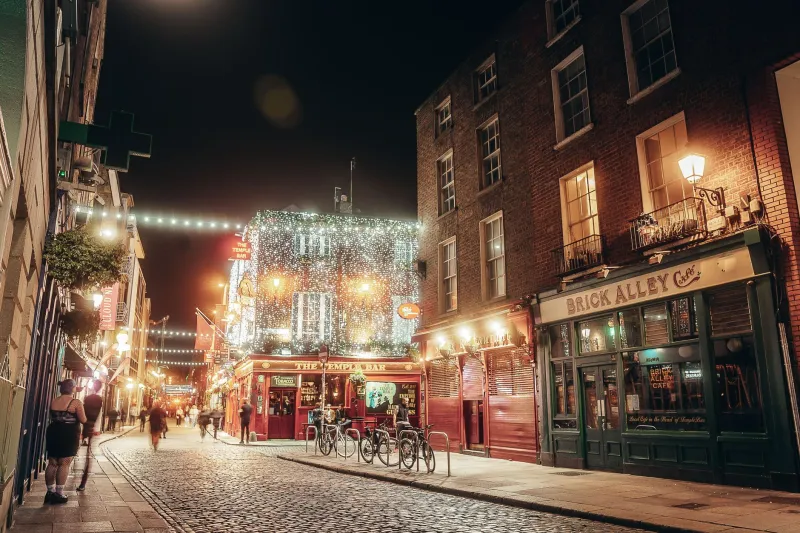
So You Think You Know How to Drink in Dublin: Temple Bar Etiquette for the Clued-Up British Visitor
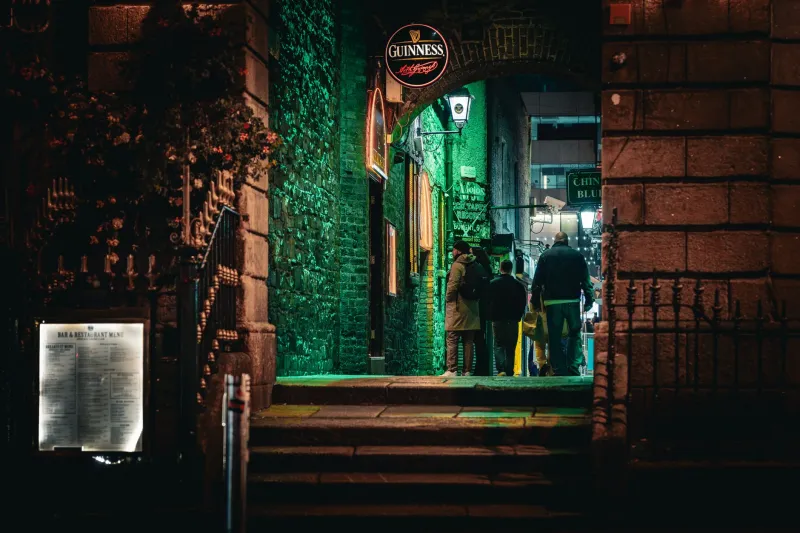
You've been to Dublin before. Maybe twice. You know the cobblestones, you've had the Guinness, you've probably taken the obligatory photo outside the Olympia. But there's a version of Temple Bar that most visitors never quite unlock — the one where the barman remembers your name, where someone at a corner table waves you over, where the night just flows without you having to engineer a single moment of it.
That version exists. And the entrance fee isn't money. It's knowing how the place actually works.
Here's what the regulars know that the first-timers don't.
The Bar Is a Queue — Even When It Doesn't Look Like One
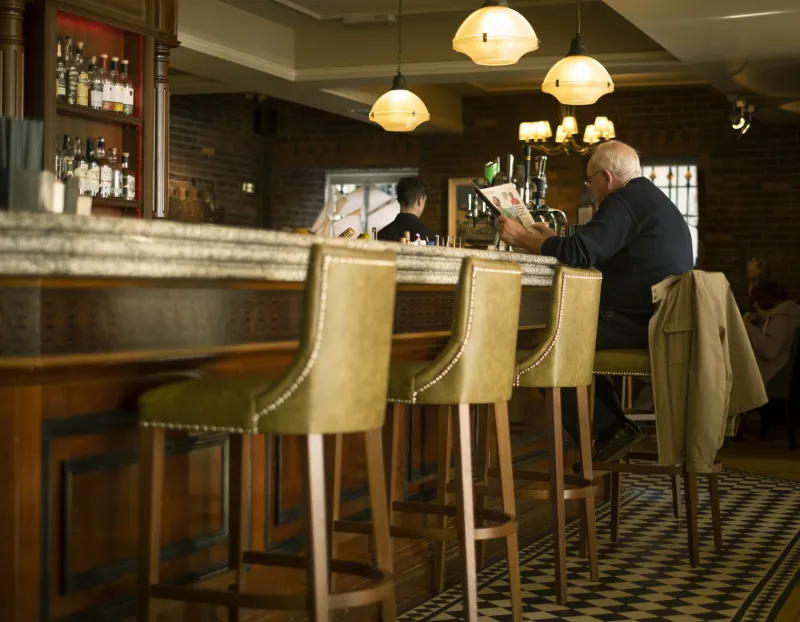
This is the one that trips up British visitors most reliably. Back home, you might hover near the bar, make eye contact, and hope for the best. In a busy Temple Bar pub, the system is a little more... intuitive. There's no formal queue, but there is an order — and the staff know it.
The trick is positioning. Get yourself to the bar, plant your feet, and don't get your phone out. Barstaff are extraordinarily good at clocking who arrived when, but they're also human — if you're staring at your notifications, you're signalling that you're not quite ready. Face forward, catch the eye when the moment comes, and for the love of all things holy, know what you're ordering before you get there.
Rolling up to the bar and asking your mate what they want once you've been acknowledged is a cardinal sin. Have your round sorted in your head. It'll make you look like you know what you're doing, and the barman will like you for it immediately.
Round Culture Is Real, and It Goes Both Ways
If you're in a group, you're in a round. That's just how it works. Someone will offer to go first — accept graciously, and make sure you're keeping count. The unspoken rule is that you don't leave before your turn comes around, and if circumstances mean you genuinely have to head off early, a quiet word and maybe buying the next one ahead of time goes a long way.
What you don't do is try to opt out quietly while everyone else keeps buying. Dublin is a small enough world that these things get noticed, and Temple Bar is smaller still. It's not about the cost — it's about the gesture.
The Table Situation Is More Complicated Than It Looks
Some tables in Temple Bar pubs have invisible names on them. Not literally, obviously, but if you've ever watched a regular walk in and head straight for a specific corner without hesitation, you've seen the phenomenon in action.
As a visitor, you're absolutely entitled to sit wherever you like — that's not in question. But if you've taken a spot and someone comes in who clearly belongs there, the move is to be friendly about it. A smile, a bit of chat, maybe shuffle along to make room if the place is filling up. Dublin hospitality runs in both directions, and a little awareness goes a long way.
Also worth knowing: the small tables near the door are generally transient territory — perfect for a quick one before you move on. The deeper you go into a pub, the more settled the energy tends to be. Choose your spot according to your intentions.
When to Talk to Strangers (And When Not To)
Here's the thing about Dublin — people will talk to you. It's not a performance, it's not because they've clocked you as a tourist and want to sell you something. It's just the culture. Someone might comment on the match, ask where you're from, or just make a remark about the weather that somehow turns into a twenty-minute conversation about hurling.
The British instinct to keep yourself to yourself doesn't always serve you well here. If someone opens a door, walk through it. You don't have to commit to the whole evening — a bit of back-and-forth, a laugh, and a genuine "enjoy your night" when you part ways is all it takes.
That said, reading the room matters. A group deep in conversation, leaning in close, laughing at something you weren't part of — that's not an invitation. But a lone regular nursing a pint at the bar, or a couple of locals who catch your eye and nod? Fair game. Go for it.
Being Polite vs. Being Memorable
There's a version of politeness that actually works against you in a busy Dublin bar. Over-apologising, saying "sorry to bother you" before every interaction, thanking the staff four times for a single transaction — it reads as uncertain rather than courteous, and it slows everything down.
What the staff genuinely appreciate is efficiency with warmth. A clear order, a "cheers" that actually means something, maybe a brief moment of genuine chat when the bar isn't three deep. If you're there for a few nights, consistency helps — come back to the same place, sit in roughly the same area, and you'll find the service getting noticeably warmer by the second evening.
A good tip, given with a bit of eye contact and a proper "thanks for looking after us," lands better than a perfunctory handful of coins dropped on the bar. It's not about the amount — it's about whether it felt deliberate.
The Music Rule
If there's live music playing, listen to it. Even if it's not your thing. Even if you're mid-sentence. When a set ends, clap — properly, not the polite British golf clap. The musicians are working hard in a noisy room and they notice the difference between an audience and a crowd that happens to be in the same space.
And if the fiddle starts up and someone near you begins to tap their foot or hum along, that's your cue to stop worrying about looking like a tourist and just enjoy it. Nobody's watching you as closely as you think.
The Bottom Line
Temple Bar doesn't ask much of you. It's not precious, it's not exclusive, and it's genuinely built around the idea that a stranger is just someone you haven't bought a drink for yet. But like anywhere with a real culture, there's a way of moving through it that gets you more out of it.
Show up ready to order. Keep the round going. Don't guard your table like it owes you something. Talk to people when they talk to you. And when the music plays, let it.
Do that, and you won't just be visiting Temple Bar. You'll be part of it.