Familiar Streets, Fresh Surprises: The Contradictions That Make Temple Bar Worth Returning To
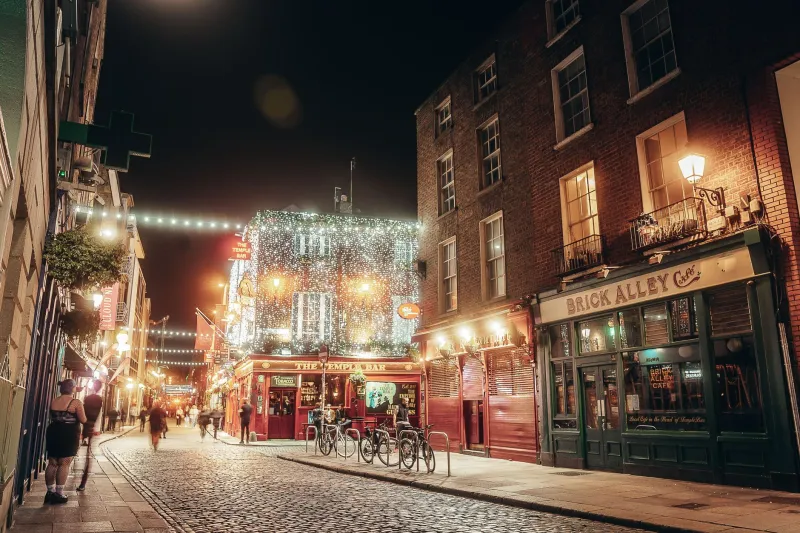
There's a certain kind of traveller who arrives in Temple Bar already sure they know what they're getting. They've seen the photos — the cobblestones glistening after rain, the pubs shoulder-to-shoulder along the quays, the hen parties and the stag dos threading between street musicians and bewildered tourists consulting Google Maps. They've heard the warnings, too. It's a tourist trap. It's overrun. Go somewhere else if you want the real Dublin.
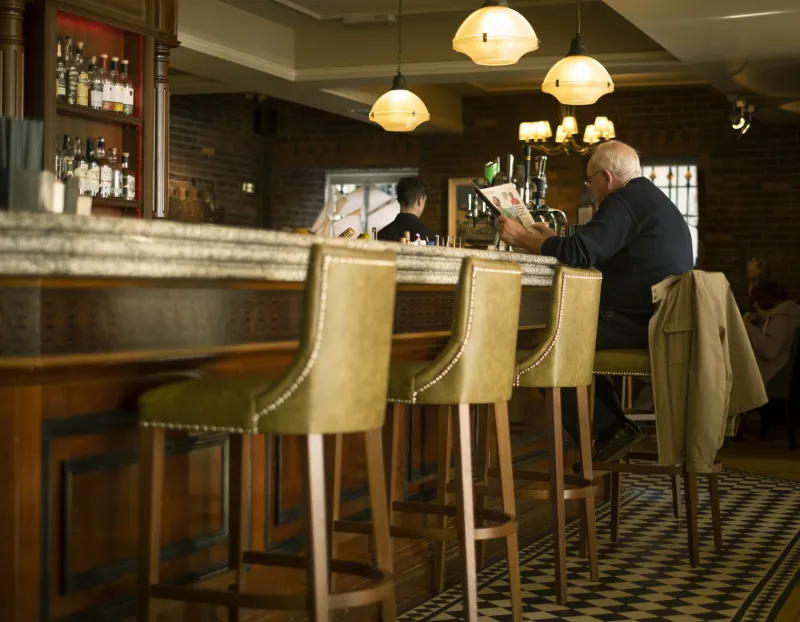
And then they sit down at a bar, get talking to the person next to them, and an hour later they're not entirely sure what just happened.
That's the Temple Bar paradox, and it's more interesting than most people give it credit for.
The Reputation Problem
Let's be honest about what Temple Bar is, at least on the surface. It is, without question, one of the most visited neighbourhoods in Ireland. On a Saturday night in summer, the streets between Dame Street and the Liffey can feel more like a theme park than a functioning city quarter. The souvenir shops are real. The inflated pint prices in certain establishments are real. The occasional feeling that you're being herded through a carefully curated version of Irishness — that's real too.
But here's what the critics tend to miss: reputation and reality are rarely the same thing, and Temple Bar has been quietly accumulating layers that don't show up in the guidebooks.
Sinéad, who has worked behind the bar at one of the area's longer-standing venues for the better part of a decade, puts it plainly. "People come in braced for disappointment," she says. "And then they're surprised when it isn't disappointing. I've had guests from Manchester, from Edinburgh, from all over — they sit down expecting a production and end up having a proper conversation. That still happens here. Every week."
What the Crowds Are Actually Hiding
The trick with Temple Bar, if there is one, is knowing that the crowds on the main drag are not the whole story. They never have been.
Duck down one of the narrower laneways that branch off from Temple Bar Square and the noise drops by half. The buildings here are older, the signage scruffier, and the clientele noticeably more local. These are the places where Dublin's creative community — artists, musicians, writers of varying degrees of output — have always gravitated. Not because they're undiscovered exactly, but because they've never quite been worth the effort for the average visitor to seek out.
For those who do make the effort, though, there's a version of Temple Bar that feels genuinely lived-in. Bartenders who remember what you ordered last time. Afternoons where a trad session starts not because it's scheduled but because someone happened to bring a fiddle. Conversations that begin as an exchange about the football and end somewhere considerably more interesting.
Dermot, a Dubliner in his fifties who grew up near the Liberties and has watched Temple Bar transform across four decades, is sceptical but not entirely dismissive. "It changed, and not always for the better," he says, nursing a coffee at a table near the window. "But the bones are still there. The character didn't completely leave. It just moved around a bit."
The Repeat Visitor Effect
There's a particular type of British visitor who comes to Temple Bar not once but regularly — year after year, sometimes twice a year, treating Dublin as a sort of second city they've quietly adopted. Talk to enough of these regulars and a pattern emerges.
Their first visit, they'll admit, was probably a bit chaotic. They went to the obvious places, paid the obvious prices, and had a perfectly fine time without quite understanding what all the fuss was about. The second visit, they started to navigate differently — avoiding certain streets at certain hours, finding a venue they liked and sticking with it, learning to read the rhythm of the place.
By the third or fourth visit, something had shifted. They'd stopped treating Temple Bar as a destination to be ticked off and started treating it as somewhere they actually knew.
"That's when it gets interesting," says Aoife, who manages one of the bars on the eastern edge of the area. "When someone walks in and they're not looking around wide-eyed anymore. They just sit down. They know what they want. They ask about the new seasonal menu. That's when you know they've actually arrived, if that makes sense."
It does make sense. There's a version of Temple Bar that only becomes available once you stop performing the role of tourist — and that version, by most accounts, is considerably better than the one in the brochures.
The Irish Hospitality Variable
Part of what makes Temple Bar resistant to simple categorisation is the staff. Not universally — there are places where the service is perfunctory and the experience forgettable — but in the establishments that have been doing this for a long time, there's a particular quality to the interaction that's difficult to manufacture.
Irish hospitality isn't a brand proposition. It's not a training module. It's something that either happens or it doesn't, and in the better bars along these cobblestones, it tends to happen with a naturalness that catches visitors off guard. A well-timed observation. A recommendation that wasn't asked for but was exactly right. The sense that the person serving you is also, in some fundamental way, hosting you — and that there's a difference.
For British visitors especially, there's something slightly disorienting about this. The cultural baseline in the UK, particularly in city-centre venues, is a certain pleasant efficiency. You order, you receive, you pay, you leave. Temple Bar, at its best, operates on a different principle — one where the transaction is almost incidental to the encounter.
So Is It Worth It?
The honest answer is: it depends on what you bring to it.
If you arrive in Temple Bar expecting it to be exactly what its reputation suggests, you'll probably find evidence to confirm that expectation. The crowds are real. The tourist infrastructure is real. None of that is invented.
But if you arrive with a bit of patience — willing to sit somewhere for longer than seems strictly necessary, willing to take a recommendation, willing to walk down a street that doesn't appear on any top-ten list — you'll find something that the reputation genuinely doesn't prepare you for.
A neighbourhood that's absorbed thirty years of tourism and still hasn't quite been flattened by it. Streets that look the same as the photos but feel different once you're actually standing on them. A version of Dublin that is, against all reasonable odds, still capable of surprising you.
That's not nothing. In fact, for a place this famous, it's rather a lot.