Once a Year, Every Year: The British Regulars Who Treat Temple Bar Like a Second Home

There's a particular kind of traveller who doesn't need a travel agent, a guidebook, or even a second thought about where they're headed. They already know. They've known for months. The flights are booked before the last trip has even ended, the hotel is the same one as always, and the first stop — before luggage is dropped, before coats are hung — is Temple Bar.
For this quietly devoted group of British visitors, the annual Dublin pilgrimage has taken on a significance that goes well beyond tourism. It's become ritual. Tradition. Something close to sacred.
The Same Seat, the Same Order, the Same Feeling
Ask any regular what draws them back and they'll rarely lead with the obvious things — the cobblestones, the live music, the Guinness. They'll pause, look slightly embarrassed by the sincerity of what they're about to say, and then tell you something much more personal.
"It sounds daft," admits Martin, a 54-year-old from Leeds who has made the trip every October for the past eleven years, "but I feel more like myself here than I do anywhere else. I walk through those doors and something just... settles."
Martin isn't alone in that feeling. Across Temple Bar's bars and restaurants, staff have their own informal registers of familiar faces — the couple from Edinburgh who always request the corner table near the window, the group of Manchester lads who show up every St Patrick's weekend without fail, the solo traveller from Bristol who nurses a Jameson and reads for hours without anyone bothering her.
These aren't accidental returns. They're deliberate, almost ceremonial ones.
What Turns a Holiday Into a Habit
Psychologists who study place attachment — the emotional bond between people and the spaces they inhabit — would recognise exactly what's happening here. When a place consistently delivers on comfort, belonging, and positive memory, the brain begins to associate it with something more profound than leisure. It becomes part of how we understand ourselves.
For British visitors in particular, Temple Bar occupies a curious emotional geography. It's close enough to feel accessible — a short flight from most UK cities — but distinct enough to feel genuinely elsewhere. The Irish approach to hospitality, the pace of a Dublin evening, the way a conversation with a stranger at the bar can last three hours without anyone noticing — none of it quite replicates what you'd find back home.
"There's no equivalent in England," says Claire, a 41-year-old teacher from Birmingham who has visited every summer since 2015. "British pubs are lovely, but there's often this invisible barrier. In Temple Bar, people just... talk to you. Properly. And you come back because you want that again."
The Traditions That Build Up Over Time
What's particularly striking about Temple Bar's most loyal British visitors is how specific their rituals become. It's rarely just about returning to a city — it's about returning to particular corners of it.
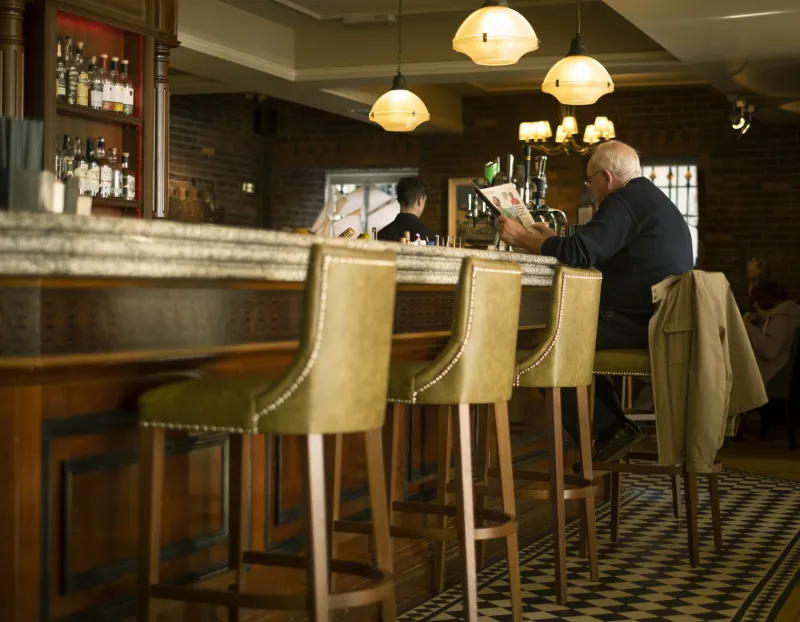
For some, it's a specific barstool. For others, it's a dish they only ever eat here — the Irish stew that tastes better than any they've attempted at home, the soda bread that arrives warm with butter before anything else. One couple from Newcastle described their annual Temple Bar visit as structured almost like a pilgrimage itinerary: first drink always at the same spot, dinner at the same table, a walk along the same stretch of the Liffey before the evening properly begins.
"We've watched the neighbourhood change around us," says David, who has been visiting with his wife since their honeymoon in 2009. "New bars open, old ones close, the crowds shift with the seasons. But we have our spots. And those spots feel like ours."
That sense of ownership — of having a stake in a place you don't actually live in — is part of what makes Temple Bar so unusual. It's a neighbourhood that somehow makes visitors feel like locals, even on a first visit, let alone a tenth.
Why Dublin, Why Temple Bar, Why Now
It's worth asking why this phenomenon seems to be growing. Anecdotally, bar staff and restaurant managers across Temple Bar report that the proportion of returning British visitors has increased noticeably over the past decade. Some put it down to the ease of travel — budget flights from regional UK airports have made Dublin a genuinely spontaneous destination. Others point to social media, which has made it easier for people to document and share their rituals, reinforcing the habit with every posted photograph.
But there's something else, too. In an era when so much feels uncertain and in flux, the appeal of a place that stays reliably itself is considerable. Temple Bar has changed, of course — it always does — but its essential character holds. The warmth is still there. The music still spills out onto the cobblestones on a Friday night. The craic, as the Irish would say, is still very much intact.
"I think people are craving consistency," says one long-serving member of staff who has watched the same faces return for years. "They want somewhere that knows them. Even if we don't remember every name, they feel remembered. That matters more than people admit."
The Return That Feels Like Coming Home
Perhaps the most telling detail about Temple Bar's British regulars is what they say when they're asked to describe arriving. Almost universally, they don't describe it as arriving at all. They describe it as returning.
There's a meaningful distinction in that language. Arriving implies novelty, the unfamiliar, the need to orient yourself. Returning implies comfort, belonging, the relief of a place that already knows your shape.
For Martin from Leeds, that moment comes as soon as he steps off the plane and feels the Dublin air — a specific quality of grey-green light that he swears exists nowhere else. For Claire from Birmingham, it's the sound of the first live fiddle she hears drifting from a doorway. For David and his wife, it's the moment the bartender looks up, recognises them, and reaches for the Guinness tap without being asked.
These are small moments. But they're the reason people book flights before the last trip has even ended.
Some places you visit. Others, you return to. Temple Bar, for a quietly devoted community of British regulars, has always been the latter — and if the booking patterns are anything to go by, it shows no signs of changing.