Same Seat, Same Smile: The Quiet Magic That Keeps British Visitors Coming Back to Temple Bar
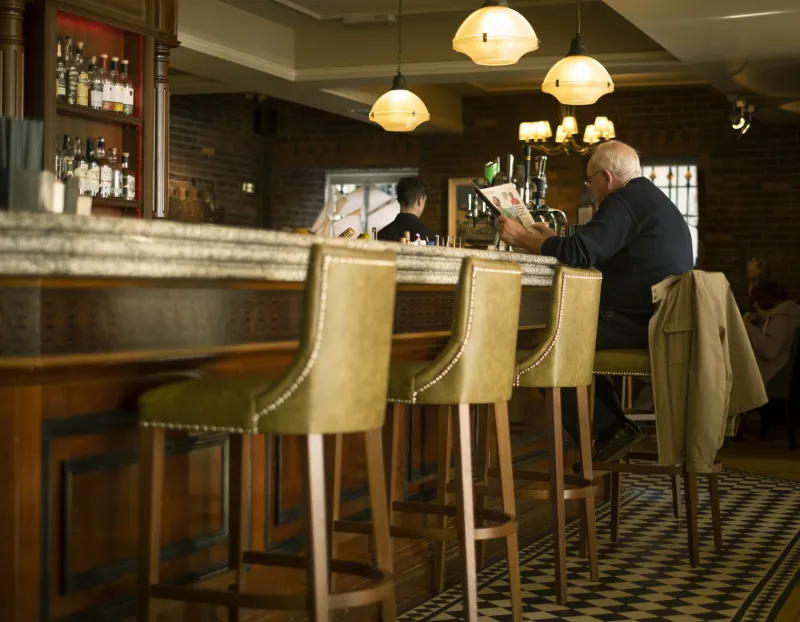
There's a particular kind of traveller who arrives in Temple Bar not with a guidebook tucked under their arm, but with a mental list. Not of things to see, but of people to catch up with. The barman who remembers they take their Jameson without ice. The waitress who'll save them the table by the window without being asked. The regular at the end of the bar who'll pick up a half-finished conversation from twelve months prior as though no time has passed at all.
For thousands of British visitors, Dublin's most famous district stopped being a destination a long time ago. It became a habit. A ritual. Something closer to a second life.
So what is it, exactly, that turns a long weekend in Dublin into a standing annual appointment?
The First Visit That Doesn't Quite Leave You
Ask any British regular about their first time in Temple Bar and the story tends to follow a similar shape. They came over for a birthday, a hen do, a work trip, or simply because the flights were cheap and a mate suggested it. They expected a good time. What they didn't expect was to feel quite so immediately at ease.
Sarah, a graphic designer from Manchester who has been making the trip every October for the past seven years, puts it simply: "I walked into a pub on my first night and within twenty minutes I was chatting to the barman about football, the couple next to me had offered to share their chips, and someone had already told me three different opinions on where to get the best breakfast the next morning. I couldn't tell you the last time a stranger in a pub back home offered me anything other than a look."
It's a sentiment that surfaces again and again. Temple Bar, for all its reputation as a tourist honeypot, has a strange ability to make people feel like insiders rather than visitors. And once you've felt that, it's remarkably difficult to settle for less.
The Barman Who Remembers
There's a psychological concept sometimes called the "cheers effect" — named, inevitably, after the American sitcom about a bar where everybody knows your name. The idea is straightforward: being recognised, remembered, and welcomed by name produces a measurable sense of wellbeing and belonging. It sounds almost embarrassingly simple. And yet it's something that has quietly vanished from much of British pub culture.
The chain pub model that dominates UK high streets prioritises consistency and throughput. Staff turnover is high, personal connection is low, and the idea of a barman remembering your preferred pour after a twelve-month absence is practically science fiction.
In Temple Bar, things tend to work differently. Many of the bars and restaurants here are staffed by people who've been in the same role for years, sometimes decades. They take genuine pride in the ritual of hospitality — not as a performance, but as something inherited and deeply meant.
Mark, a solicitor from Bristol who visits Dublin twice a year, describes the moment he realised something had shifted: "I came back after about eighteen months away — life got in the way — and the lad behind the bar looked up and said, 'Guinness, is it? And how's the wife?' I nearly fell over. That doesn't happen in Bristol. That doesn't happen anywhere I've been in England."
The Unspoken Rules of Belonging
Every regular eventually learns the unspoken grammar of their adopted local. In Temple Bar, that education tends to happen faster than you'd expect, partly because the locals are generous teachers.
There's the understanding that you don't rush a pint of Guinness — you let it settle, you wait, and you appreciate that good things take the time they take. There's the quiet etiquette around sessions, where live music isn't background noise to talk over but something you actually listen to, at least for a song or two. And there's the particular art of the Dublin conversation — warm, winding, occasionally philosophical, and almost always willing to include a stranger.
For British visitors used to the more guarded social dynamics of a Saturday night pub back home, this openness can feel almost startling at first. By the second or third visit, it starts to feel like the natural order of things. By the fifth or sixth, anything less feels like a disappointment.
Jen, a teacher from Edinburgh who has been visiting Temple Bar annually since her early twenties, describes it as a recalibration: "Every time I come back, I spend the first few hours remembering how to be easy with strangers. And then I wonder why I ever forgot."
What the High Street Simply Can't Replicate
It would be unfair to suggest that great pubs don't exist in the UK — they absolutely do. But the specific alchemy of Temple Bar is harder to bottle than a craft ale.
Part of it is architectural. These are old buildings with low ceilings, worn wood, and the particular warmth that comes from decades of good evenings soaked into the walls. Part of it is cultural — Irish hospitality carries a genuine philosophical weight, a sense that looking after your guest is not merely good manners but something approaching a moral duty.
And part of it, honestly, is the slight remove of being away from home. In Temple Bar, you're not worried about bumping into your boss or your ex. You're not carrying the weight of your ordinary week. You're a visitor, which paradoxically makes it easier to be yourself.
Regulars often describe a version of this: the feeling that in Dublin, they become a slightly better, more open, more present version of themselves. The city seems to encourage it.
The Ritual That Sustains
For many British regulars, the annual or twice-yearly trip to Temple Bar has taken on the quality of a ritual in the truest sense — something that marks time, restores perspective, and reconnects them to a version of life they want to keep hold of.
The specific details vary. For some it's a particular pub, a particular table, a particular order. For others it's the walk along the cobblestones at dusk, or the first sip of a perfectly pulled pint after a day of travel. For others still it's the conversation — the easy, unhurried kind that feels increasingly rare and increasingly valuable.
What they share is the sense that Temple Bar gives them something they can't quite get elsewhere. Not just a good night out, but a reminder of what a good night out can actually feel like when it's done properly.
Sarah from Manchester puts it best: "I've tried to explain it to people who haven't been, and I always sound a bit mad. But there's a barstool in a pub off Dame Street that has my name on it, as far as I'm concerned. And every October, I go back to sit in it. That's just who I am now."
Some rituals, once started, are simply too good to stop.

