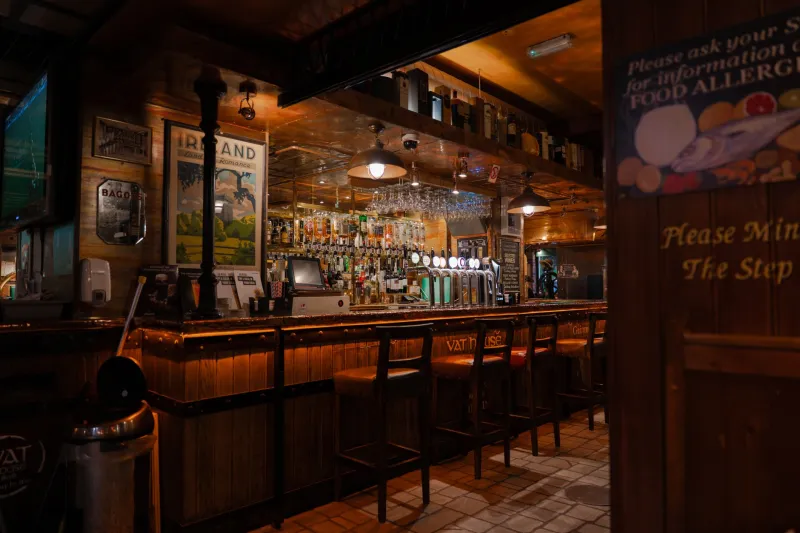
The E That Changes Everything: Your No-Nonsense Guide to Ordering Irish Whiskey in Temple Bar
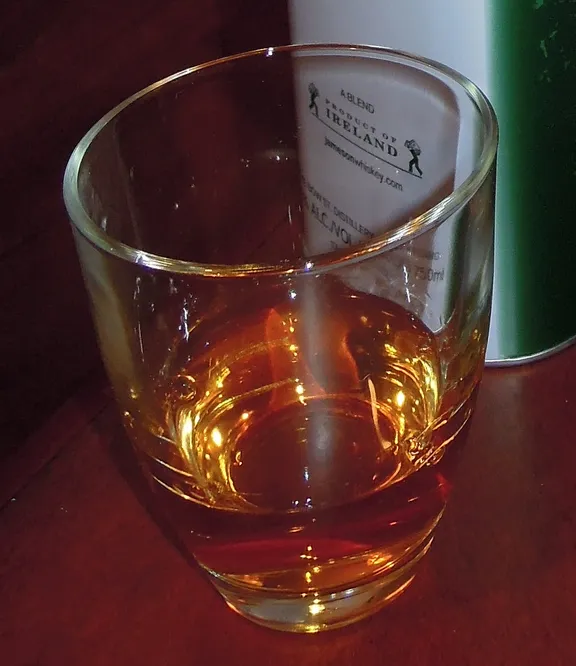
Photo: GotIreland, CC BY-SA 2.0, via Wikimedia Commons
Let's get the spelling out of the way first, because it matters more than you might think. Irish whiskey has an 'e'. Scotch whisky does not. This isn't pedantry — it's a marker of identity that the Irish feel quite strongly about, and walking into a Temple Bar bar and asking for 'a nice whisky' will, at best, get you a polite correction. At worst, you'll be handed something Scottish. Neither outcome is ideal.
Once you've got the spelling right, the real conversation can begin.
Why the Difference Goes Way Beyond Spelling
The distinction between Irish whiskey and Scotch whisky isn't just geographical or orthographical — it's about fundamentally different approaches to production, flavour, and philosophy. Understanding even the basics will transform what you order and how much you enjoy it.
The most significant technical difference is the distillation process. Irish whiskey is typically distilled three times. Scotch, with some exceptions, is distilled twice. That additional pass through the still strips away more of the rougher compounds, producing a spirit that's noticeably smoother and lighter on the palate. This is why Irish whiskey is often described as approachable — it's not a backhanded compliment, it's an accurate one.
Then there's the question of peat. Scotch, particularly from Islay, is famous for its smoky, almost medicinal character, which comes from drying malted barley over peat fires. Most Irish whiskey doesn't use peated malt, which means the smoke element is largely absent. If you've tried a Laphroaig and found it a bit like drinking a campfire in a good way, Irish whiskey will come as a gentler revelation. If you found Laphroaig overwhelming, Irish whiskey might be exactly what you've been looking for.
The Styles You'll Actually Encounter
When you're standing at a Temple Bar bar and looking at the back shelf, knowing what's what will help enormously.
Single Malt is made from 100% malted barley at a single distillery. This is the category most UK drinkers are familiar with from Scotch, and Irish single malts — Teeling Single Malt, Bushmills 10 Year, and the increasingly celebrated Redbreast 12 — offer a useful point of comparison. They're fruitier and more floral than most of their Scottish equivalents.
Single Pot Still is the category that's uniquely Irish, and arguably the most interesting. It uses a mix of malted and unmalted barley in the same pot still, a tradition that developed partly in response to a British malt tax in the 18th century. The result is a spicier, creamier style with a characteristic oiliness that whisky drinkers from Scotland or Japan simply won't have encountered before. Redbreast is the standard-bearer here. Green Spot is the one to order if you want to sound like you know exactly what you're talking about.
Blended Irish Whiskey is what most people are drinking when they order Jameson, Bushmills Original, or Tullamore D.E.W. These are approachable, consistent, and genuinely well-made — don't let anyone tell you blended is inferior. It's just different. For a first drink in a busy bar, a Jameson and ginger ale is a perfectly respectable choice and nobody should judge you for it.
Single Grain is lighter still, made from grains other than malted barley in a continuous still. Teeling Single Grain, finished in Californian red wine casks, is a good example of how interesting this category can be when distillers push it.
What to Actually Order Based on Your Palate
If you're a Scotch drinker who loves the peaty stuff — start with Connemara. It's one of the few peated Irish whiskeys on the market and offers a genuine bridge between the two traditions without abandoning what makes Irish whiskey its own thing.
If you're relatively new to whiskey and find spirits a bit harsh — Jameson Crested or Teeling Small Batch are both forgiving, flavourful, and easy to enjoy neat or over a single large ice cube.
If you want to try something the bartender will genuinely be pleased you ordered — ask for Redbreast 15 or Powers John's Lane. Both are pot still expressions with real depth, and both will give you a sense of what Irish whiskey can be when it's not trying to be anything else.
If you've got a budget and you want to make an occasion of it — Midleton Very Rare, if they have it, or the Teeling 24 Year Single Malt. You won't regret it.
The Mistakes Most British Visitors Make
Ordering on autopilot is the big one. Walking into a Temple Bar bar with a back shelf full of extraordinary Irish expressions and asking for 'a Scotch' because that's your default is a missed opportunity of the highest order. You're in Dublin. Drink what Dublin does best.
Adding too much mixer is another. A splash of water can genuinely open up the flavour of a good whiskey — a small amount lowers the alcohol content just enough to release aromatic compounds that are suppressed at full strength. But drowning a Redbreast 12 in cola is, frankly, a waste of everyone's time.
Finally, don't confuse confidence with expertise. Bartenders in Temple Bar have heard every incorrect pronunciation of Tullamore ('tulla-MORE', for the record) and every overconfident declaration about what makes Irish whiskey superior to everything else. What they actually appreciate is genuine curiosity — someone who asks questions, listens to the answers, and is willing to try something they've never heard of before.
One More Thing About That Letter
The 'e' in whiskey is, in a small way, a declaration of independence. Ireland has been making whiskey for longer than almost anyone — some historians argue it's the oldest whiskey-producing nation in the world. The spelling difference is a reminder that this tradition is its own thing, with its own logic, its own flavour, and its own story.
Order accordingly.