Crowded, Cobbled, and Completely Genuine: The Strange Truth About Temple Bar's Authenticity
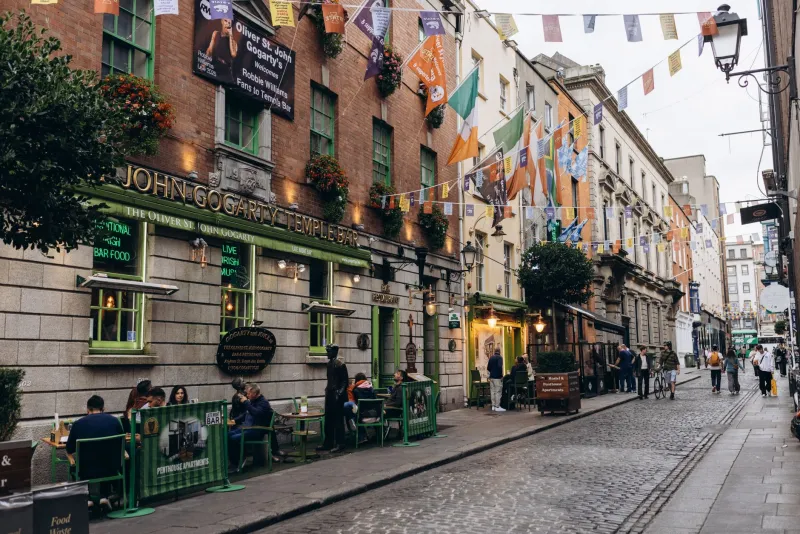
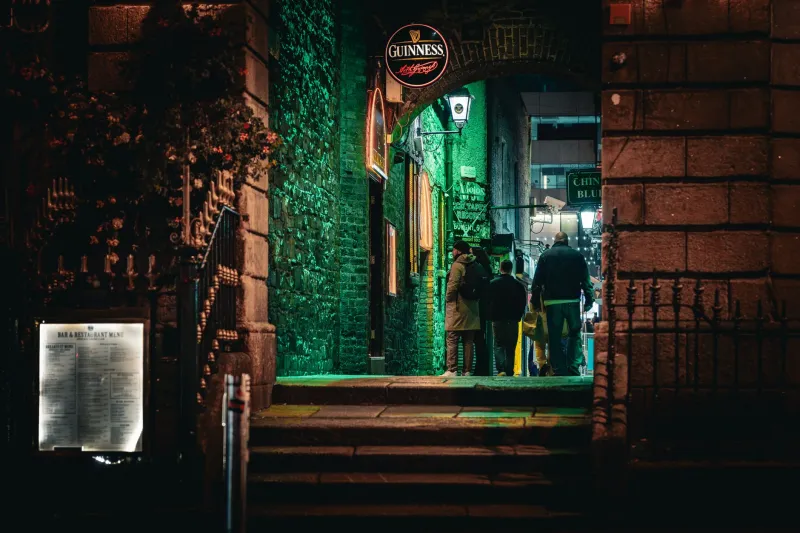
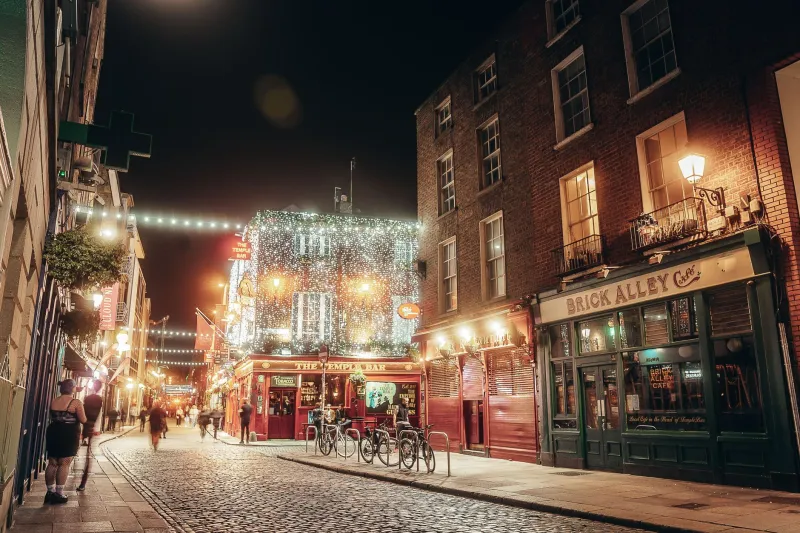
Ask a Dubliner where not to go for a quiet pint and they'll probably mention Temple Bar before they've finished drawing breath. Too many stag parties, they'll say. Too many people photographing their Guinness. Too many shops selling tea towels with leprechauns on them. They're not entirely wrong. On a Friday evening in July, the cobbled streets between the Liffey and Dame Street can feel less like a neighbourhood and more like a theme park with a liquor licence.
And yet. Ask a British visitor who's just spent a long weekend there what they made of it, and something curious happens. They don't reach for words like "manufactured" or "hollow." They say things like "brilliant craic," "the friendliest people," and — perhaps most tellingly — "it felt real."
So who's right? The locals who dismiss it, or the outsiders who keep coming back?
The honest answer is: both. But the more interesting question is why a place can be simultaneously overrun with tourists and stubbornly, genuinely itself.
The Paradox Nobody Talks About
There's a standard cultural assumption that tourism kills authenticity. The more visitors a place attracts, the more it hollows out — the independent shops get replaced by chains, the locals stop going, and eventually you're left with a stage set where a neighbourhood used to be. It's happened in parts of London. It's happened in Barcelona. It happens.
But Temple Bar doesn't quite follow that script, and the reason has something to do with what was already there before the tourists arrived in numbers. This was always a working district — a place of print shops, secondhand bookstores, small theatres, and pubs that had been pouring drinks since before the Act of Union. The bones of the place are genuinely old. The culture that developed in those bones — the particular Irish talent for conversation, for music, for making a stranger feel like a regular — didn't evaporate when the cobblestones started getting photographed.
What happened instead is that the tourism layered on top of something that was already there. And for British visitors, who arrive with enough cultural familiarity to notice the difference between a real Irish pub and a pastiche of one, that underlying substance is exactly what they pick up on.
What the Staff Actually Do
Spend an evening in any of the longer-established bars in Temple Bar and pay attention to how the staff work. Not just the mechanics of pulling a pint — though that's done with a care that still impresses people from a country where a flat lager arrives in thirty seconds — but the social work they do.
They remember what you ordered. They ask where you're from without it feeling like a script. They'll tell you, unprompted, that the band starting at nine is genuinely worth sticking around for, or that the kitchen does a coddle on Thursdays that's worth rearranging your plans to try. This isn't customer service training. It's hospitality as a cultural reflex — something Irish bar culture has been practising for long enough that it looks effortless even when it isn't.
For British visitors, this lands differently than it might for someone arriving from further afield. People from the UK understand pub culture. They know what a good landlord looks like and what a perfunctory one feels like. When Temple Bar's bar staff treat them like guests rather than transactions, they notice — because they have a reference point for the alternative.
The Music That Nobody Scheduled
One of the most reliable markers of genuine culture is unpredictability. Manufactured experiences are, by definition, consistent. They deliver the same thing every time because that's what they've been designed to do.
The live music in Temple Bar's pubs is not like that. Yes, there are sessions on the listings. Yes, you can plan around them. But what actually happens on any given night has a wonderful tendency to escape its own schedule. A trad session that was supposed to end at eleven is still going at half past midnight because a fiddle player nobody had booked turned up and joined in. A singer doing a quiet solo set gets a spontaneous accompaniment from a bodhrán player who happened to be sitting at the bar. A group of musicians who don't know each other find a key and start playing.
This is not theatre. It can't be staged because the people involved aren't performing for the audience — they're playing for each other, and the audience gets to watch. British visitors, many of whom have grown up with the idea of live music as something you pay a ticket price for and watch from a distance, find this genuinely startling. It's one of the things they mention most when they talk about why Temple Bar felt real to them.
The Architecture of Belonging
There's something worth saying about the physical design of the pubs themselves. The best ones in Temple Bar aren't open-plan drinking sheds. They're rooms within rooms — snugs, corners, booths, low ceilings, fireplaces that get used in October and not switched off until April. These spaces weren't designed by interior consultants trying to create a "cosy atmosphere." They evolved over decades and in some cases centuries, shaped by the way Irish people actually wanted to drink: in proximity to others but with enough definition to feel like you had your own space.
This matters more than it sounds. The social architecture of a pub determines how people behave in it. A long bar with nowhere to sit creates a different kind of evening than a room with alcoves and a fire. Temple Bar's older pubs have the second kind of layout, and it encourages exactly the kind of slow, settled, conversational drinking that British visitors associate with a proper night out — as opposed to the standing-up-holding-a-drink experience that passes for pub culture in too many UK city centres.
Why Distance Helps
There's one more thing worth acknowledging, and it's slightly uncomfortable: British visitors might be better placed to appreciate Temple Bar's authenticity precisely because they're not from Dublin.
Locals have context. They know what Temple Bar was like before the crowds, they know the pubs that didn't make it, and they're comparing what exists now to a version that lives in memory. That comparison is always going to make the present look diminished.
Visitors from the UK arrive without that weight. They see what's actually in front of them: a neighbourhood that's genuinely alive after dark, staffed by people who are good at their jobs and seem to enjoy them, full of music that hasn't been sanitised into background noise, and anchored by a pub culture that still takes the ritual of a well-poured drink seriously.
Is it the "real" Dublin? That's probably the wrong question. Temple Bar is real enough — real staff, real music, real Guinness, real conversation. For a long weekend from Bristol or Birmingham or Edinburgh, that's not a compromise. That's exactly what you came for.