Why Temple Bar Turns Ordinary Visitors Into People Who Can't Stop Talking About Dublin

You've heard it before. Someone gets back from a weekend in Dublin, and within about forty-eight hours of landing at Heathrow or Manchester or Edinburgh, they're cornering colleagues in the kitchen at work. You have to go. Not just Dublin — Temple Bar, specifically. That particular corner, that particular pub, that particular barman who remembered their name by the second round.
It happens constantly. And the interesting thing isn't that Temple Bar is famous — it is, obviously — but that people don't come back talking about it the way they talk about, say, the Eiffel Tower or the Colosseum. They don't describe it like a landmark. They describe it like something that happened to them.
So what's actually going on?
The Difference Between Visiting and Being Welcomed
Most tourist destinations put you at arm's length. You look at things. You photograph them. You leave. The experience is essentially passive, and however beautiful or historically significant the thing you've seen, you remain a spectator.
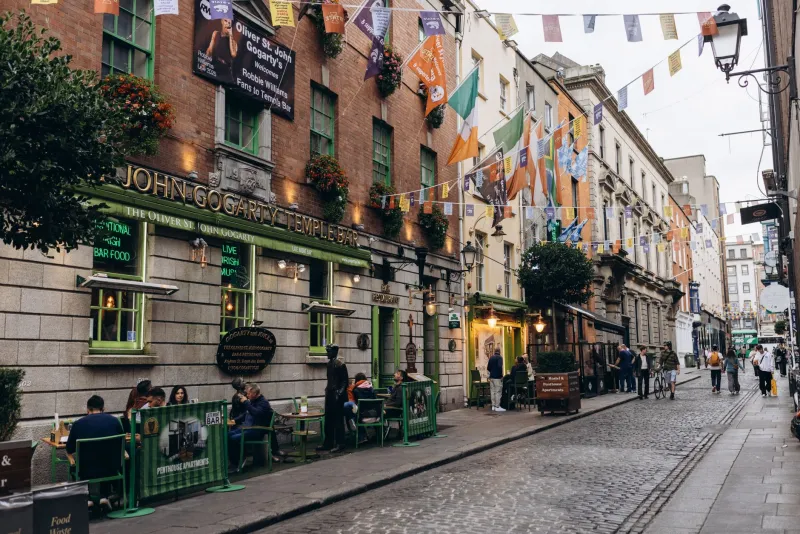
Temple Bar doesn't do that. It pulls you in — sometimes literally, as a barman waves you over, or a table of locals shuffles up to make room, or a musician catches your eye mid-song and gives you a nod that somehow feels like a private joke between the two of you. The cobblestones and the painted shopfronts are the backdrop, but the real architecture of the place is human.
For British visitors in particular, there's something almost disorienting about this. We're used to a certain transactional quality to hospitality. Friendly enough, sure. But warm in the way that Temple Bar is warm? That's different. That's the kind of warmth that makes you feel like you've been let in on something.
The Sensory Overload That Somehow Doesn't Overwhelm
On paper, Temple Bar should be chaotic. On a Friday evening, it is chaotic — packed streets, music spilling out of three different doors at once, the smell of something good frying somewhere nearby, laughter you can hear before you can see who's laughing. By rights, it should feel like too much.
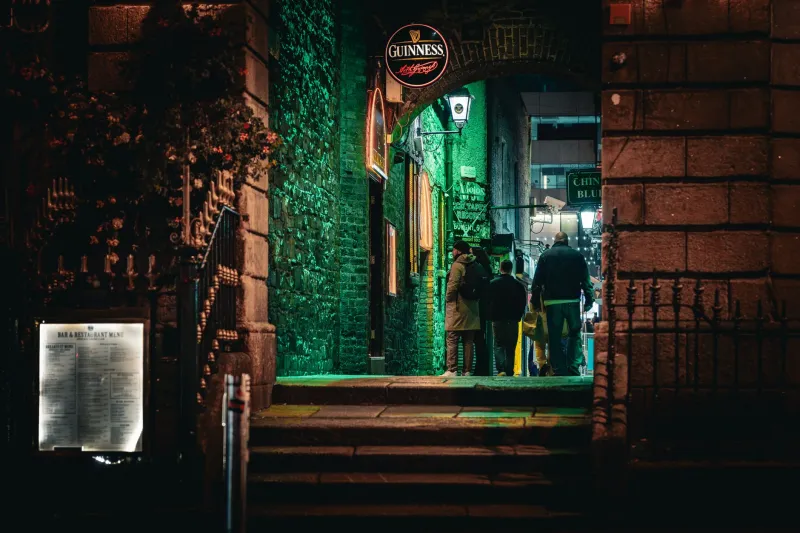
But here's the strange thing: most people describe it as energising rather than exhausting. The sensory experience — the clatter of glasses, the warmth of a crowded bar, the particular golden light that Dublin pubs seem to specialise in — works together rather than against itself. It's loud, but it's not harsh. It's busy, but it doesn't feel hostile.
Psychologists who study what makes places memorable talk about something called peak-end experiences — the idea that we remember moments by their emotional high points and how they concluded, rather than by a flat average of everything that happened. Temple Bar is relentlessly good at creating those peaks. The unexpected conversation. The perfect pint. The musician who played the song you hadn't heard in years. These moments stick, and they stick hard.
The Story Needs a Cast
Here's something worth noticing about the stories people tell when they get back from Temple Bar: they almost always include other people. Not just friends they came with, but strangers. The bloke at the bar who turned out to be from Galway and gave them a list of places to eat. The couple celebrating their anniversary at the next table who ended up sharing a bottle of something with them. The barman who, unprompted, told them the history of the building they were sitting in.
This is not accidental. Irish pub culture — real Irish pub culture, the kind that Temple Bar still carries in its bones — is built around conversation as a social good. The bar isn't just somewhere to drink. It's a place where you're expected to engage, where silence is a temporary state rather than the default, and where the people around you are considered part of the evening rather than obstacles to it.
For visitors from the UK, where the unspoken rules of pub etiquette often include don't talk to strangers unless they talk first, this can feel revelatory. Suddenly you're talking to people you'd never have approached at home, and it doesn't feel awkward — it feels completely natural. That's the environment doing its job.
Why It Feels Personal Even When It's Popular
Temple Bar is, objectively, one of the most visited areas in Ireland. It sees millions of tourists a year. And yet — and this is the trick it keeps pulling off — almost nobody comes back describing it as a tourist trap. They come back describing it as their discovery.
Part of this is the physical layout. Temple Bar isn't a single attraction with a queue and an exit through the gift shop. It's a neighbourhood — winding, slightly unpredictable, full of side streets and unexpected courtyards and bars that look small from outside and turn out to be enormous inside. You don't consume it in a linear way. You wander into it, and it reveals itself gradually, which means everyone's experience is genuinely different.
And part of it is the people who work there. Good hospitality — the kind that makes you feel seen rather than processed — is hard to fake and impossible to manufacture at scale. When it's real, you know. And in Temple Bar, it tends to be real.
The Story You Can't Help Telling
There's a reason the stories spread. When you feel like you've had an experience rather than ticked a box, you want to pass that feeling on. You want to give someone else the chance to have what you had — not just see what you saw.
That's the Temple Bar effect, stripped back to its essentials. It gives people something worth telling. A moment with a stranger. A drink that was better than expected. A song at the right time. A city that felt, just for a weekend, like somewhere you might actually belong.
And somewhere between the cobblestones and the closing time, without quite knowing how it happened, you became the person recommending Dublin to everyone you know.
Welcome to the club. It's a big one.