Beyond the Postcards: What Temple Bar Actually Gets Right
Temple Bar has a reputation problem. Ask any Dubliner and they'll roll their eyes — overpriced pints, hen dos, and shamrock tat as far as the eye can see. It's become something of a sport in this city, dismissing the neighbourhood as a theme park built for people who've never actually been to Ireland. And look, there's a grain of truth in that.
But spend a little more time here than a flying visit, and a different picture starts to emerge. One that's messier, more interesting, and a lot more worth your while.
How Temple Bar Got Its Bad Name
The story of Temple Bar's fall from grace is well-worn territory. Through the 1990s and into the Celtic Tiger years, the area was deliberately developed as Dublin's cultural quarter — a compact, walkable neighbourhood of cobbled streets and Georgian buildings that could anchor the city's growing tourism trade. It worked, perhaps too well.
What followed was the classic trap: as tourist footfall increased, rents rose. Independent businesses gave way to operators chasing volume. Pubs that had once been genuine local institutions started optimising for stag parties rather than regulars. The pints got dearer, the atmosphere got louder, and the locals quietly drifted elsewhere.
By the mid-2000s, Temple Bar had become the kind of place Dubliners went out of their way to avoid on a Friday night — which, ironically, only accelerated its transformation into something designed entirely around visitors.
What the Critics Keep Getting Wrong
Here's the thing, though. The narrative that Temple Bar is purely a tourist trap is itself a little lazy. It flattens a genuinely complex neighbourhood into a single, unflattering caricature.
For a start, the area's cultural infrastructure is legitimately impressive. The Irish Film Institute on Eustace Street has been quietly doing essential work for decades — it's one of the best independent cinemas in these islands, full stop. The Temple Bar Gallery and Studios, tucked away from the main drag, represents a serious commitment to working artists rather than decorative ones. The National Photographic Archive sits here too, housing an extraordinary collection that most people wander straight past.
None of this is tourist bait. It's the real thing.
Finding the Neighbourhood Behind the Noise
The trick to Temple Bar — and it is something of a trick — is learning to move slightly off the obvious routes. The main square, particularly on weekend evenings, is exactly as chaotic as advertised. But the streets that feed into it tell a different story.
Cow's Lane, for example, hosts a designer market on weekends that draws genuine Dublin creative talent rather than mass-produced Celtic knot keyrings. The handful of independent coffee shops and bookshops that have survived the rent pressures offer proper neighbourhood atmosphere — the kind where staff actually remember your face.
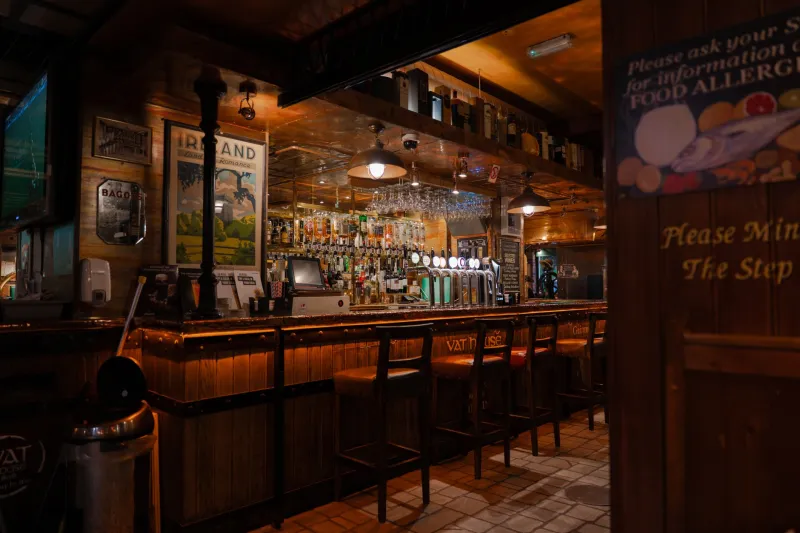
And then there are the pubs themselves. Yes, some of them have leaned hard into the tourist-friendly formula: live trad sessions every night of the week, laminated menus with photographs, pints at prices that would make even a London drinker wince. But others have held their ground. The distinction is usually visible the moment you walk through the door — in the age of the clientele, the lack of branded merchandise, the bartender who's been there long enough to have opinions about things.
Why It Still Matters to Locals
For all the eye-rolling, Dubliners haven't entirely abandoned Temple Bar. They've just become more selective about when and why they go.
The neighbourhood still hosts some of the city's better live music venues, and not all of them are running trad sessions on a loop. There's a genuine late-night scene here that outlasts most of the rest of the city centre. And there's something to be said for the sheer density of the place — within a few minutes' walk, you can move from a craft cocktail bar to a traditional snug to a restaurant doing something genuinely interesting with Irish produce.
For visitors from the UK, the comparison that probably lands closest is somewhere like Camden or Shoreditch circa 2010 — a neighbourhood that had clearly been developed for tourism but retained enough grit and genuine character to reward the curious. You wouldn't go there expecting a quiet local experience. But you'd be wrong to write it off entirely.
The Honest Verdict
Temple Bar is not, and probably never will be again, the kind of neighbourhood where Dubliners do their everyday drinking. The economics don't allow for it, and the tourist volumes make it impractical.
But it's not the soulless theme park its critics describe either. The cultural venues are real. The history embedded in those cobblestones is real — this was a working city neighbourhood long before anyone thought to market it, with a genuine bohemian character that predates the gift shops by decades.
The best way to approach it, whether you're visiting from Birmingham or living around the corner in Rathmines, is with calibrated expectations. Don't come looking for the authentic Dublin your grandad remembers. Do come ready to look past the obvious stuff, take a few turns off the main square, and give the neighbourhood a proper chance to show you what it's actually made of.
You might be surprised.